

Shanti Lowry and the Seduction of Duality
By Seraphine Vale
The Art of Presence
There are actresses who step into roles, and then there are those rare figures who dissolve the boundary between character and self—who do not simply perform but transform the atmosphere around them. Shanti Lowry belongs unmistakably to the latter.
Her presence is not loud, nor does it rely on spectacle. Instead, it operates with precision—measured, deliberate, and quietly commanding. When she enters a room, there is an undeniable shift in energy, as though she has already studied every angle, calibrated every interaction, and chosen exactly how much of herself to reveal. It is this tension—between revelation and restraint—that defines her artistry and makes her uniquely suited for PERSONA, the psychological thriller she both leads and executive produces.
Lowry’s magnetism lies not in excess, but in control. And in PERSONA, control becomes both her weapon and her canvas.
A Career Built on Complexity
Shanti Lowry has never been interested in surface-level storytelling. A two-time Emmy-nominated actress recognized for her nuanced portrayal of Yolanda in Bronx SIU, she has consistently gravitated toward roles that demand emotional depth and psychological layering.
Her career spans a wide spectrum of acclaimed television series, including NYPD Blue, Girlfriends, The Closer, The Game, Kingdom, and Code Black. In each performance, there is a recurring undercurrent—something unspoken simmering beneath the dialogue. She does not simply deliver lines; she embeds meaning within silence, gesture, and gaze.
Yet with PERSONA, Lowry enters a new creative dimension. She is no longer just interpreting a character—she is shaping the very architecture of the story.
The Pull of an Unseen Perspective
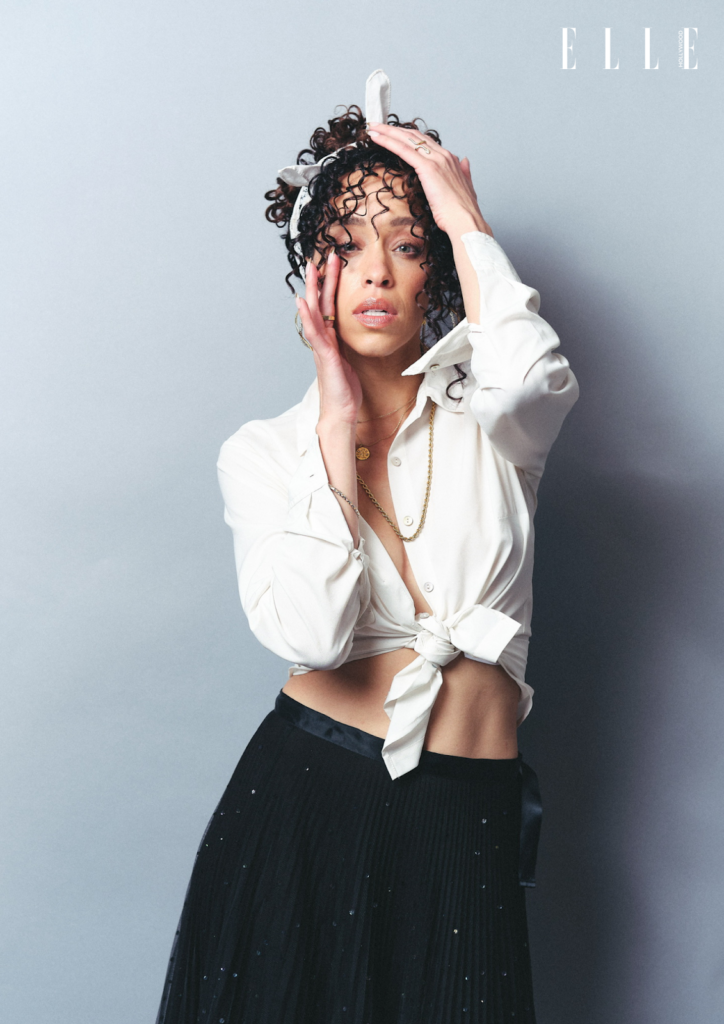
Lowry’s connection to PERSONA was immediate and visceral. The script presented something rare: a narrative perspective she had never encountered before.
Her reaction was instinctive, almost electric. The story offered complexity without compromise—a layered female protagonist navigating moral ambiguity, vulnerability, and power. It was not a role designed for comfort or easy categorization. It was a challenge.
What compelled Lowry further was not just the character, but the fragility of the material itself. Psychological thrillers demand a delicate balance. Every pause, every shadow, every silence must serve a purpose. Mishandled, the story could collapse into cliché. Executed with care, it could become something unforgettable.
Lowry recognized that PERSONA required more than performance—it required protection. Protection of tone, of nuance, and of the intricate emotional layers that define the narrative.
From Actress to Architect
Taking on the dual role of lead actress and executive producer is often seen as a logistical burden—one that risks dividing focus and diluting performance. For Lowry, however, the opposite proved true.
Immersing herself in the production process deepened her connection to the character. From wardrobe mood boards to lighting tests, from conversations with cinematographers to backstory discussions with hair and makeup teams, every detail became part of her preparation.
This was not simply technical work. It was creative immersion.
The process of defending her vision, listening to collaborators, and refining each scene transformed her understanding of the character. By the time filming began, Lowry was not stepping into the role—she was already living within it.
There is something almost choreographic about the way she describes this experience. Every element—visual, emotional, narrative—moves in sync, guided by intention and rhythm.
Discipline Behind the Art

Long before she commanded screens, Lowry mastered the language of movement.
At seventeen, she toured internationally with Earth, Wind and Fire—an experience that demanded discipline, stamina, and precision. She performed under the legendary choreography of Debbie Allen for Chaka Khan and was among the original members of The Pussycat Dolls.
Dance, at its highest level, is not just expression—it is control, repetition, and relentless refinement. It is the art of making effort invisible.
That same discipline now defines Lowry’s acting. Her performances are not accidental; they are constructed with the same rigor as choreography. Every emotional beat is intentional. Every pause is calculated.
In PERSONA, this discipline becomes a defining force, allowing her to navigate the character’s psychological complexity with both fluidity and control.
The Power of Female Duality
At the core of PERSONA lies a central theme: duality. Not as a narrative device, but as a fundamental truth of human experience.
The film challenges the traditional binary framework often imposed on female characters—the expectation that women must be either virtuous or villainous, strong or vulnerable, victim or aggressor. PERSONA refuses this simplification.
Instead, it embraces contradiction.
Lowry’s portrayal captures this duality with striking authenticity. She allows the audience to feel both empathy and unease, often simultaneously. The character resists easy interpretation, forcing viewers to confront their own assumptions about morality, judgment, and identity.
For Lowry, this complexity is not just artistic—it is deeply personal. She recognizes the limitations of how women, particularly women of color, are often portrayed in media. Too often, they are reduced to archetypes, stripped of nuance and depth.
PERSONA becomes a direct challenge to that narrative.
Rewriting the Narrative

Lowry’s influence extends beyond her performance. As a producer, she made intentional decisions about the creative team behind PERSONA.
The result was a production composed of fifty percent women and seventy-five percent people of color.
This was not a marketing strategy or a symbolic gesture. It was a reflection of the story’s needs. The narrative demanded authenticity, perspective, and lived experience—elements that could only be achieved through diverse voices.
Through this process, Lowry experienced a shift in her creative philosophy. What began as a passion project evolved into something more profound—a redefinition of purpose.
Her “North Star,” as she describes it, has changed.
Producing is no longer an extension of her career; it is a platform for impact.
A Story That Demands Conversation
While PERSONA delivers the intensity and suspense expected of a psychological thriller, its ambitions extend far beyond entertainment.
Beneath its tension lies a deeper inquiry into human behavior. The film explores themes of empathy, victimhood, villainization, and the complexities of trauma. It confronts uncomfortable realities, including issues such as bullying and trafficking, without offering easy answers.
Lowry’s hope is not simply that audiences enjoy the film, but that they leave questioning their perceptions.
The story is designed to linger—to provoke thought, spark conversation, and challenge the instinct to categorize individuals too quickly.
In this sense, PERSONA is not just a film. It is an experience.
The Evolution of Power

Throughout her career, Lowry has demonstrated remarkable range. From emotionally charged dramas to commercially successful projects like the 2025 holiday feature #WorstChristmasEver, she has proven her ability to navigate diverse genres with ease.
But PERSONA represents something different.
It is not just a performance—it is a declaration.
Lowry is no longer waiting for opportunities to portray multidimensional women. She is creating them. She is building narratives that reflect the complexity she has always sought.
This evolution is not marked by dramatic reinvention, but by quiet authority. She does not announce her transformation; she embodies it.
Strength Without Apology
What makes Lowry’s ascent particularly compelling is her refusal to conform to industry expectations. She does not dilute her vision to fit established frameworks. Instead, she sharpens it.
Her approach is both strategic and instinctive. She understands the power of storytelling—not just as entertainment, but as a tool for cultural reflection and change.
In an industry still grappling with how to portray women authentically, PERSONA arrives as both a mirror and a provocation. It challenges audiences to reconsider how quickly they judge, how easily they simplify, and how rarely they extend empathy.
At the center of this narrative stands Lowry—composed, intelligent, and unwavering.
Embodiment of Duality
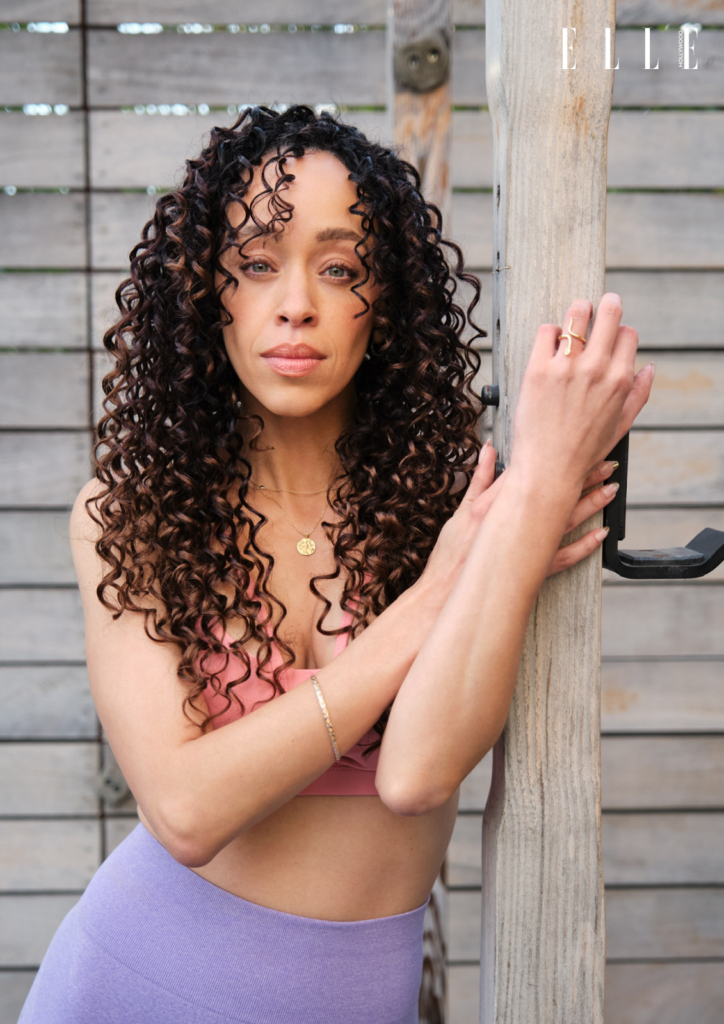
In PERSONA, Shanti Lowry does not simply explore duality—she embodies it.
She is softness and steel. Vulnerability and command. Artist and executive. Observer and creator.
Her performance invites audiences into a space of uncertainty, where clear answers are replaced by layered truths. It is a bold choice, particularly in a cultural landscape that often prioritizes clarity and comfort.
But Lowry is not interested in comfort.
She is interested in truth.
A New Era of Storytelling
As Lowry continues to expand her influence both in front of and behind the camera, it becomes clear that she is entering a new phase of her career—one defined by intention, authorship, and impact.
She is not merely participating in the evolution of storytelling; she is actively shaping it.
PERSONA is only the beginning.
Conclusion: Claiming the Narrative
There is something undeniably powerful about watching a woman claim her space without hesitation.
Shanti Lowry does not wait for permission. She does not seek validation. She builds, refines, and executes with clarity of vision.
In doing so, she redefines what it means to be a leading woman in contemporary cinema—not just a face on screen, but a force behind it.
She is not stepping into leading-lady territory.
She is claiming it.
Photography Credit: Birdie Thompson